
Sashiko (刺し子, literally “little stabs”) is a form of decorative reinforcement stitching (or functional embroidery) from Japan.

Sashiko has many faces. You’ve probably seen someone repair their well-loved denim with a sashiko stitch. You also have probably seen an entire coat made of sashiko, or even the classic five-pocket denim pant made entirely of the beautifully embroidered fabric. Wherever you’ve seen it, I’m sure it caught your eye and left you enamored, wondering ‘What is this? Why does it look like this? What the hell is Sashiko?’ If this is the case, you might enjoy what you’re about to read. Let’s jump into one of the oldest examples of Folk Art and why you’re seeing it so much 500 years later.

The Sashiko stitch started a lot further back than you’d expect. (I certainly didn’t realize it was such an old craft until I did my research recently) The origins of the stitch design stem from China, but like many crafts from China during the 17th century, it made it’s way to Edo-period Japan and the Japanese took this utilitarian embroidery and made it their own – crafting new styles and patterns that are still used to this day.
Due to it being extremely useful and strong stitch in repairing clothing it became popular in rural areas with the working class, especially women. It makes a lot of sense; the working-class people of these areas needed a reliable way to repair clothing and a stitch that would be simple enough that anyone could do it – hence why it spread throughout the country so rapidly and steadily. To these lower-class Japanese at the time, every scrap of fabric was extremely important and useful, so keeping a blanket or overcoat alive for as long as possible was very necessary.
It’s also important to discern the difference and now intertwined definition of Sashiko. The stitch, which is the terms origin, was the stitch pattern used to repair and reinforce garments, while a sashiko weave can describe a fabric woven to appear as tightly stitched sashiko patterns.
Because of the obvious history of decades past – sashiko stitching has deep roots in it’s adopted homeland, Japan. Many brands that you may know of; FDTML, Blue Blue Japan, Japan Blue, Visvim, Kapital, etc. use the stitch as an accent to their pieces, or even front and center as the main design. One you may know of is the ‘Century Denim’ by Kapital; a wearable art piece that revitalized this centuries-old tradition into the modern day. A marriage of the roots of the Japanese craftsmanship and the American silhouettes that the Amekaji style was birthed from, Kapital brought many forms of this fabric to life in their 5-pocket denim and their ‘rider’ jackets based on old Lee denim jackets, not to mention many others through out the years.
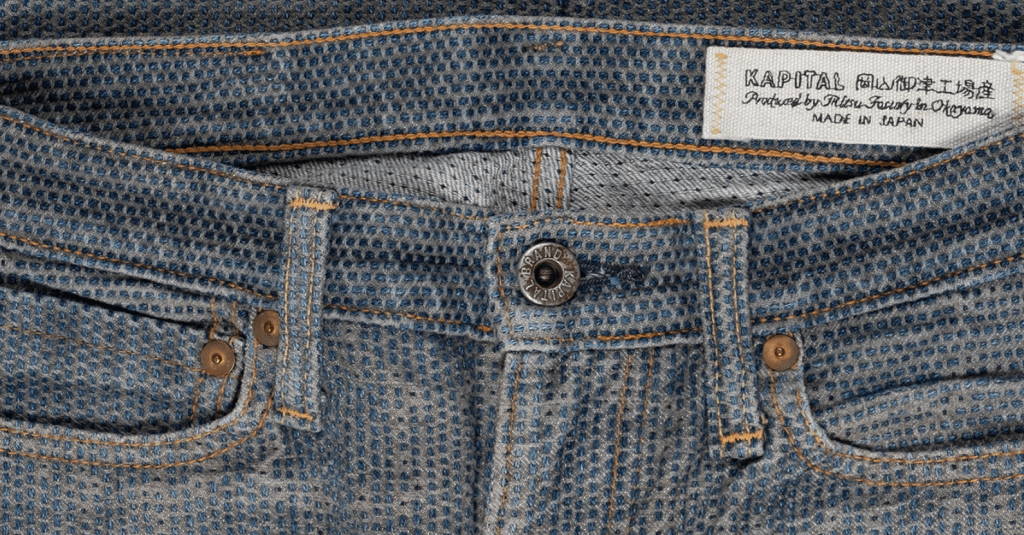
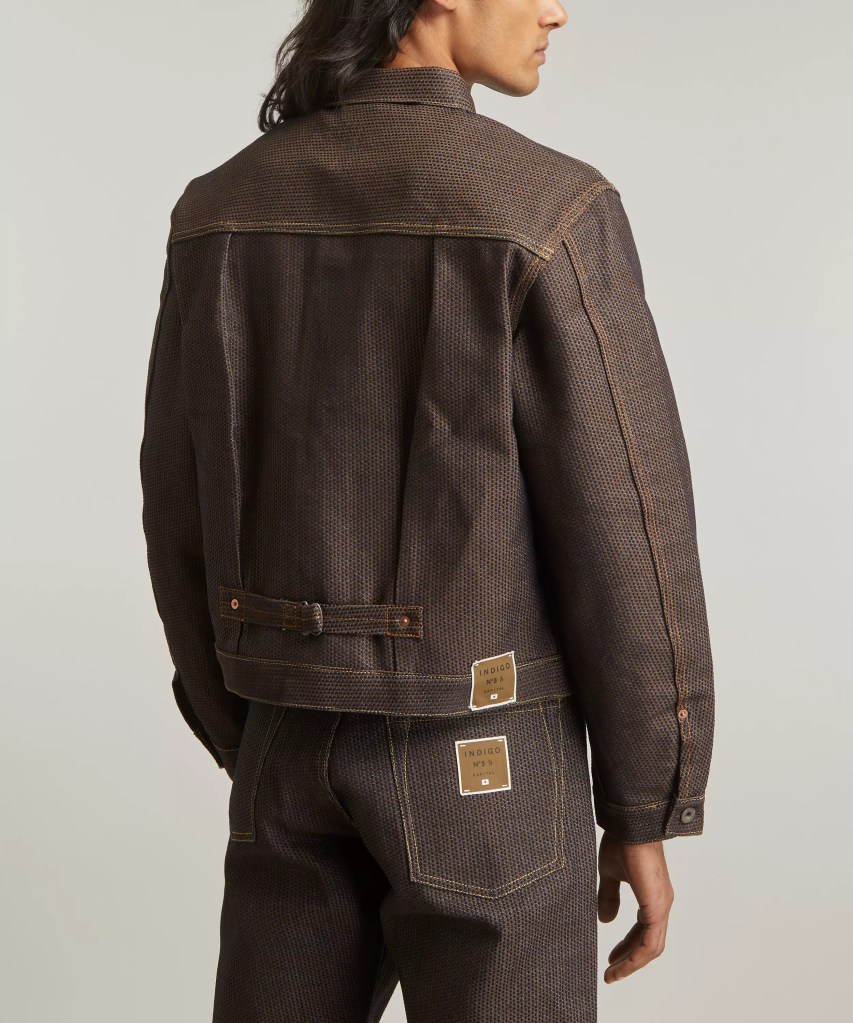
This, of course, is just a drop in the bucket of the offerings that are out there today. I could spend hours writing paragraphs of other brands who are offering sashiko fabrics and stitch-adorned garments, but we’ll save that for another day. The cultural impact that sashiko has had on modern fashion has been extremely profound. While it’s difficult to pinpoint exactly why this is – the stitch itself is entirely pleasing to the eye, as it’s usually in contrast with the fabric and an interesting pattern to boot. I would also credit the (almost) fetishization of Japanese culture in the past 20+ years – from anime, manga, to our obsession with Japanese-made goods, including denim of course, it can be argued that the reoccurrence of an age-old repairing technique is the fortunate by-product of such obsessions leading to people wanting to repair their worn (usually) Japanese garments with something that has it’s roots and beginnings in that culture. I would argue that it belongs as such as almost a loving tribute to the tradition. Many people would be inclined to agree, there are nearly a hundred or more YouTube videos with up to hundreds of thousands of views just on how to do the stitch yourself at home with a needle and thread; something that most can do without any previous knowledge of any repair work or sewing. As a matter of fact, I’ve done it myself and I would not consider myself adept to sewing or repairing garments at all. This lends itself to another reason for it’s popularity – an easy and accessible way to repair your garments. You just need a few materials and some patience. Perhaps because of this, it’s something we see done still to this day, nearly 400 years later. With this being said, I can only imagine we will continue to see this sashiko stitch and it’s woven counter-part for many more years to come as an influx of western and European brands continue to be inspired by Japanese silhouettes, culture, and fabrics.
I tend to dress somewhat traditional and true to historical fabrics, but a good fabric is a good fabric. I even have some pieces that are sashiko-woven, and I love them dearly. From hats and bags made of the fabric, to your classic five pocket denim, you can easily dress your entire body in the stuff if you wanted. Honestly, I think it’s quite a beautiful thing that we have adopted such a unique repair-technique-turned-artform into our fashion catalogues and adoringly don our bodies in it so many years later.
What sashiko pieces do you own?
 INDIGO AMATEUR
Leave a comment